
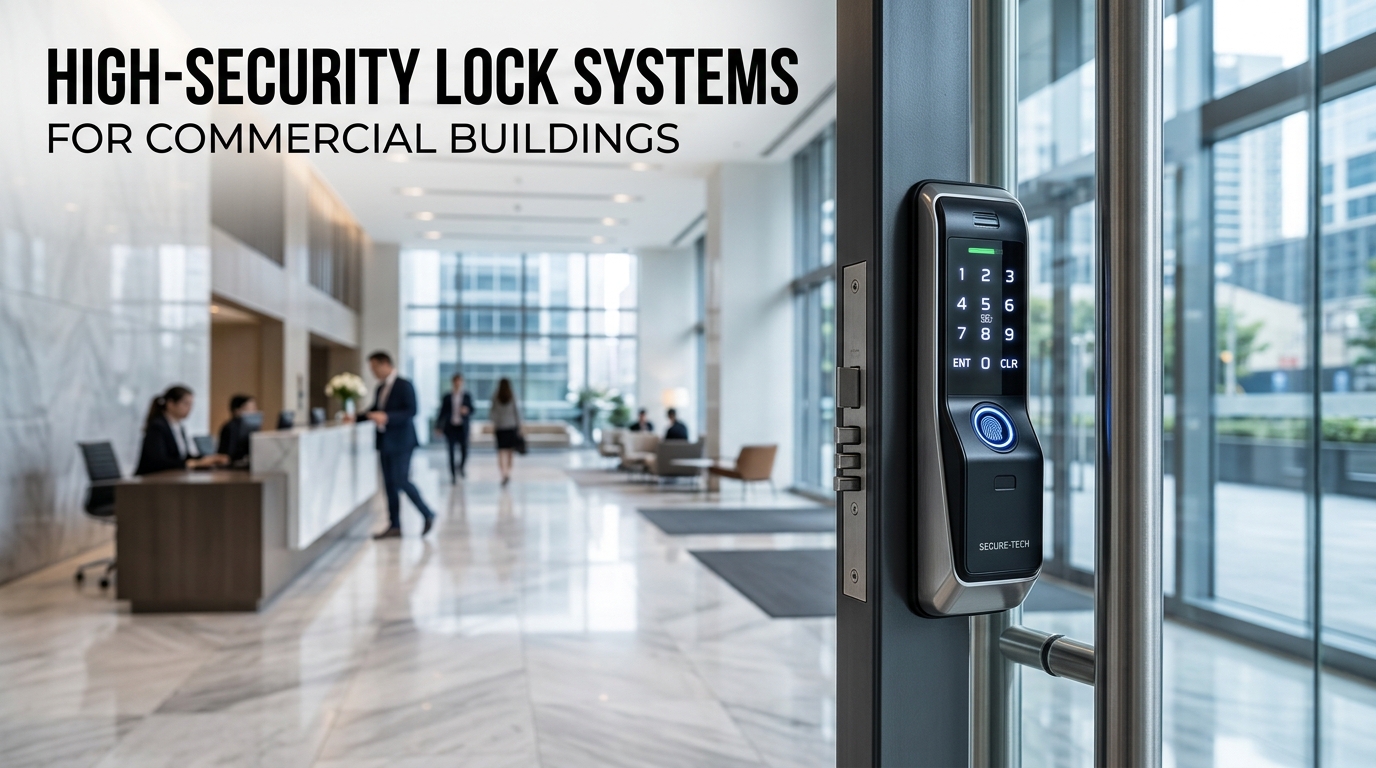
A break-in at a commercial building doesn’t just mean stolen property. It can also mean lost data, damaged equipment, and a team of employees who no longer feel safe coming to work. The locks on your doors are the first line of defense between your business and that kind of damage. Working with an experienced commercial locksmith in Birmingham can help ensure your property is protected with the right security solutions.
With so many lock options available today, how do you know which ones are actually worth installing, and what makes a lock high-security for your business?
That’s what this article is all about. It’ll discuss different high-security commercial locks that you can consider for your commercial property.
What Are High-Security Commercial Locks?
High-security commercial locks are built to a higher standard than regular door locks. They’re harder to pick, drill, or force open, and they’re designed to withstand repeated daily use in busy commercial spaces. Most of them meet specific industry certifications that confirm their strength and durability.
Many business owners in Birmingham prefer them because they:
- Are resistant to picking, drilling, and forced entry
- Are built to handle heavy daily use without wearing down quickly
- Come with restricted keyways that prevent unauthorized key copying
- Offer better protection for employees, equipment, and sensitive business information
- Are available in mechanical and electronic versions to match different security needs
- Often meet ANSI/BHMA grading standards that confirm their performance level
Top Types of High-Security Locks for Commercial Buildings
Commercial lock technology has come a long way. Businesses used to depend on basic pin tumbler locks, but those offer very little resistance against someone who knows how to pick them. Today, commercial buildings use everything from heavy-duty mortise locks and reinforced deadbolts to biometric systems and magnetic locks that are managed digitally. The right lock depends on the type of business, the level of traffic coming through the door, and how much control you need over who gets access and when.
Deadbolt Locks
A deadbolt lock uses a solid metal bolt that extends deep into the door frame, making it very hard to force open. It doesn’t use a spring, so it cannot be picked with a card or a simple tool. Deadbolts work well for back doors, storage rooms, and office spaces that need reliable, straightforward security.
Mortise Locks
Built directly into the door, mortise locks offer a higher level of strength than many standard lock types. The lock includes both a latch and a deadbolt, creating a more secure entry point. Because they withstand constant use very well, they are widely installed in commercial properties like office buildings and hotels.
Cylindrical Lever Locks
Cylindrical lever locks are popular in commercial settings where doors are opened many times each day. Their lever handles improve ease of use while helping businesses comply with ADA guidelines. Heavy-duty versions also offer stronger resistance against forced entry.
Electronic and Smart Locks
Electronic and smart locks replace the traditional key with a code, card, fob, or smartphone. They let building managers control access remotely and track who enters and exits. Businesses that manage multiple entry points or have employees working different shifts tend to benefit from this type of lock.
Biometric Locks
Biometric locks use fingerprints, retinal scans, or facial recognition to grant access. Because access is tied to a person’s unique physical traits, there are no keys to lose or codes to share. They’re best suited for high-security areas like server rooms, medical record storage, and financial offices where unauthorized access is a serious concern.
Magnetic Locks
Magnetic locks operate by creating an electromagnetic bond between the lock and the door frame. As long as electricity is flowing, the door remains locked. They are frequently used in offices, government buildings, and facilities where doors need to unlock automatically during emergencies.
What Are 3 Grades of Commercial Door Locks?
Commercial door locks are rated by the American National Standards Institute (ANSI) and the Builders Hardware Manufacturers Association (BHMA) using a three-grade system. The following grades tell you how strong the lock is and what kind of use it’s built for:
Grade 3
Grade 3 is the lowest rating and is designed for light residential use. These locks are not recommended for commercial buildings because they aren’t built to handle the wear that comes with heavy daily use or serious forced entry attempts.
Grade 2
Grade 2 locks are a step up and work for light commercial applications. They can handle moderate traffic and offer better durability than Grade 3, but they are still not ideal for high-traffic commercial spaces or areas that need stronger security.
Grade 1
Grade 1 is the highest rating and the standard for commercial buildings. These locks go through the most rigorous testing for strength, durability, and security. If you’re securing a commercial property, Grade 1 locks are usually the best choice.
Also Read: Emergency Car Lockout Tips You Need to Know
Factors to Consider When Choosing a Commercial Lock
Picking the right lock for your business isn’t just about going with the most expensive option. There are several factors to consider before making a decision, and getting it right is important for your building’s security and safety. Keep these things in mind when choosing a commercial lock:
- Check if the lock meets local building codes and fire safety requirements for your type of business
- Consider whether you need to track or restrict access for specific employees or areas
- Factor in whether you want a keyed system or an electronic access solution that can be managed remotely
- If the door serves as an emergency exit, it must meet code requirements for that specific use
- Go for grade 1 locks that are the right choice for any exterior or high-use commercial door
Why Professional Lock Installation Matters for Businesses
A high-security lock only works as well as the installation behind it. If a lock isn’t fitted correctly, it can leave gaps that make the door easier to force open, even if the lock itself is top-rated. A professional commercial locksmith in Birmingham knows how to install different lock types across different door materials and frames, and they make sure everything is aligned and functioning the way it should.
Beyond the installation itself, a licensed locksmith can also assess your current setup and point out weak points you may not have noticed. That kind of insight is hard to get from someone who just watches a video and grabs a screwdriver. For a commercial building, where security affects employees, clients, and assets, professional installation isn’t a step worth skipping.
Need a New Lock for Your Commercial Space? Contact ATC Locksmith Alabama
Ready to upgrade the locks on your commercial property? ATC Locksmith Alabama is here to help. We work with all types of commercial locks and can help you figure out what’s the best choice for your building, budget, and security needs. Don’t wait until there’s a problem to take security seriously. Call ATC Locksmith Alabama today and get your commercial space properly protected.